
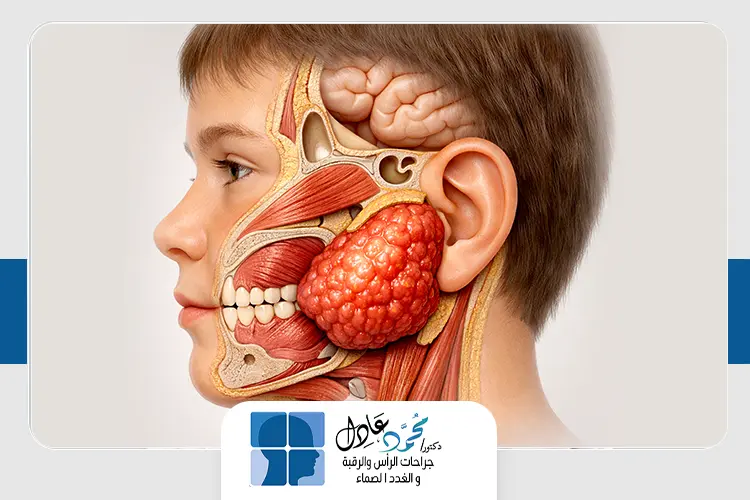
Pain when chewing, heat, or a cheek that seems larger than usual… Symptoms that might make any parent immediately think about mumps. But parotitis in children has more than one cause, and the appearance of swelling does not automatically mean that the child is infected with the virus.
Inflammation may be related to a viral or bacterial infection, while swelling may sometimes be caused by a problem with saliva flow or other causes. Therefore, knowing the cause is the first step to properly dealing with the condition.
In this article, we explain the causes of parotitis in children, the most important symptoms, methods of diagnosis and treatment, and when it is necessary to see a doctor, in addition to the most important methods of prevention and we clearly answer the question: Is the parotid gland dangerous?

What are the causes of parotitis in children?
Mumps may occur in children due to several reasons, and the mumps virus is not the only cause of swelling of the gland. Inflammation may be associated with a viral or bacterial infection, or occur due to blockage of the gland’s duct or accumulation of saliva inside it. Therefore, knowing the cause helps determine the appropriate treatment and avoid confusing mumps with other conditions that cause gland swelling.
Viral mumps
Mumps is one of the most common causes of inflammation and swelling of the parotid glands in children. It is a viral infection that is transmitted from one person to another through respiratory droplets and saliva during coughing, sneezing, or talking, as well as through close contact or sharing some personal items. When infected with mumps, swelling and pain may occur in one or both parotid glands, and may be accompanied by high temperature, headache, fatigue, and loss of appetite.
But it is important to note that not every child who suffers from a swollen parotid gland has mumps; There are other reasons that can lead to inflammation or enlargement of the gland.
Bacterial infection
Parotitis may occur as a result of a bacterial infection, especially when the flow of saliva decreases or the child becomes dehydrated, which allows secretions to accumulate inside the gland and creates a suitable environment for bacteria to grow. Some conditions can also be associated with poor oral health.
Bacterial infection may appear in the form of painful swelling in the gland, with a high temperature, and sometimes secretions from the gland’s duct inside the mouth. Dealing with it differs from viral mumps. The child may need an antibiotic if the doctor confirms the presence of a bacterial infection.
Other causes of inflammation or swelling of the gland
The causes of parotitis are not limited to mumps or bacterial infection. Swelling may occur as a result of blockage of the gland’s duct or the presence of stones in the salivary ducts, which prevents the normal exit of saliva and leads to its accumulation inside the gland. In some of these cases, swelling and pain may increase while eating as a result of increased saliva secretion.
Cases of recurrent parotitis may also appear in children, which are cases in which bouts of swelling and pain may recur without the cause each time being mumps. Therefore, if the swelling of the gland recurs or persists for a long time, it is best to evaluate the child medically to determine the exact cause.
The most important symptoms of mumps in children
Symptoms of mumps appear gradually, and their severity may vary from one child to another. The disease often begins with general symptoms such as fever, headache, and fatigue, and then swelling of the parotid gland appears during the following days. The most prominent symptoms include:
- Swelling and painin one or both parotid glands, which may make the cheek appear fuller.
- High temperature.
- Headache, feeling tired and exhausted.
- Anorexia.
- Pain in the jaw or next to the ear.
- Pain that increases when chewing or swallowing, especially when eating foods that stimulate the secretion of saliva.
- Sensitivity or pain in the area surrounding the jaw and ear.
The symptoms of mumps may be mild in some children, and others may be infected without obvious symptoms. The swelling of the glands usually reaches its peak within several days and then begins to gradually improve.
With pictures, parotitis in children
Viewing pictures of parotitis in children helps identify the visible signs associated with the disease, as swelling often appears in the area in front of the ear and extends to the cheek and below the jaw. The severity of the swelling may vary from one child to another, so images cannot be relied upon alone to diagnose the condition, especially since some other health problems may cause similar symptoms. For this reason, it is recommended to consult a doctor if you notice any swelling in the face accompanied by a high temperature or feeling pain while chewing or chewing