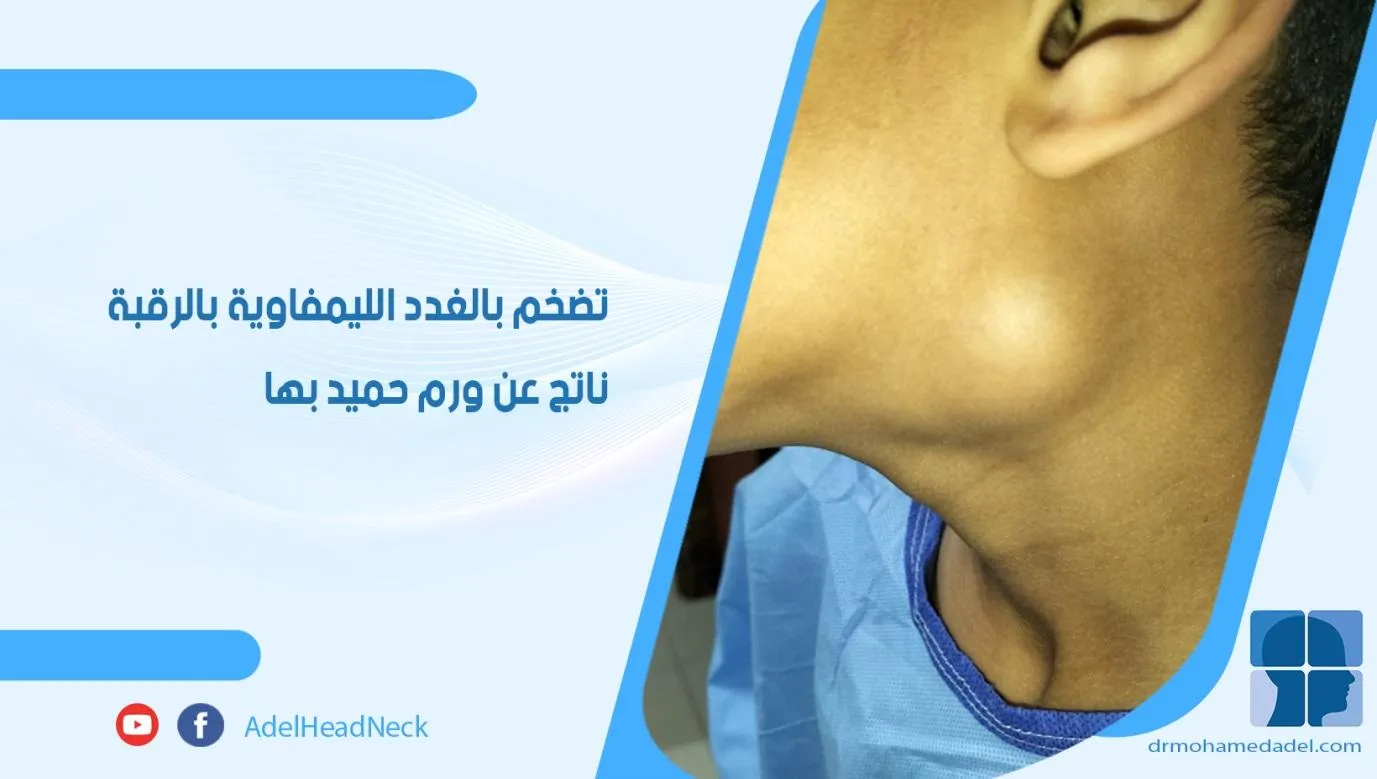

Enlarged Head and Neck Lymph Nodes in Adults
Lymph node enlargement is common among adults and the elderly. Any group of lymph nodes in the body can become enlarged due to infections, benign tumors, or cancerous growths. Lymph nodes are distributed throughout the body and are associated with most organs.The lymph node groups in the neck play a significant role in the course of many diseases; they are particularly prone to frequent inflammation resulting from infections of the throat, sinuses, mouth, tongue, and teeth.

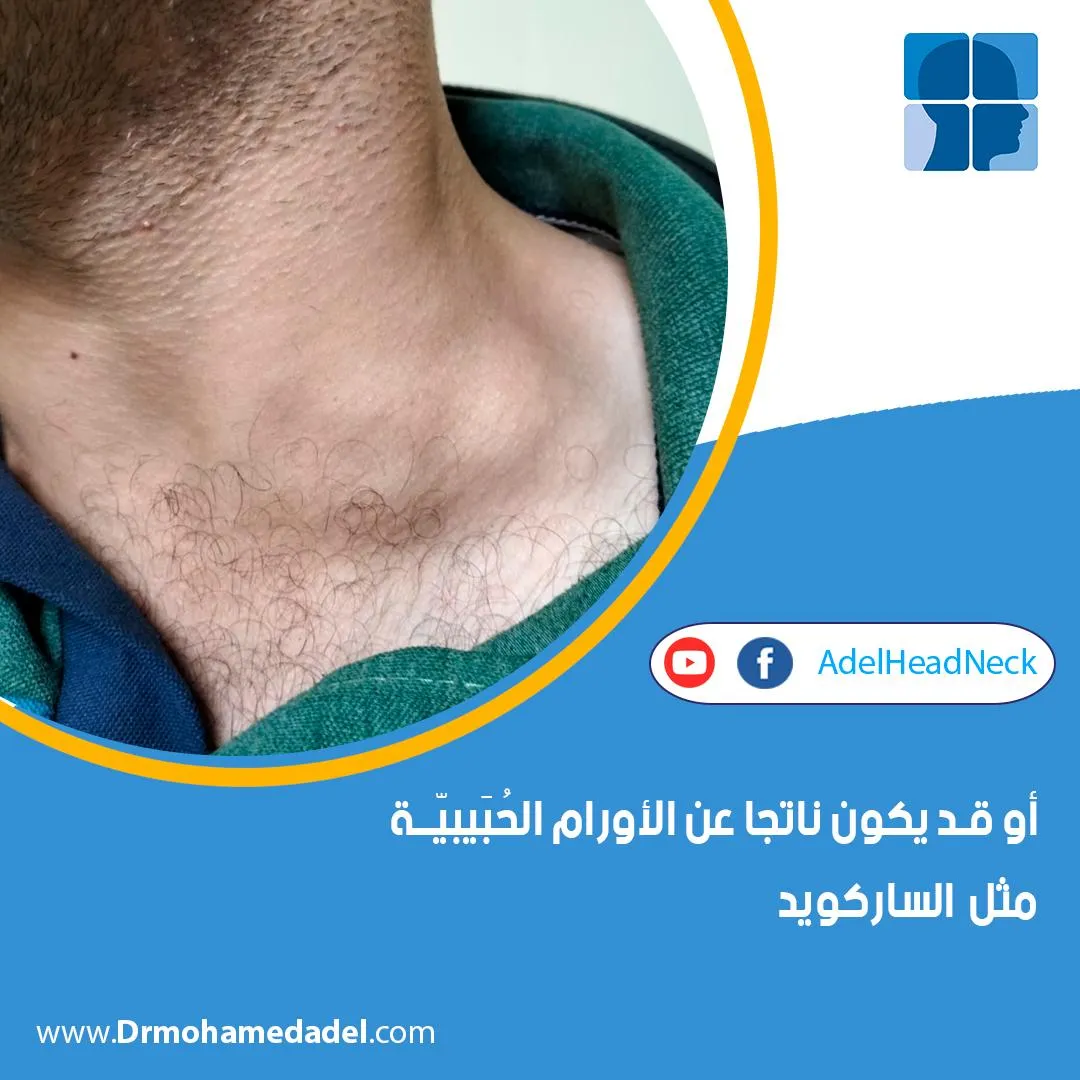

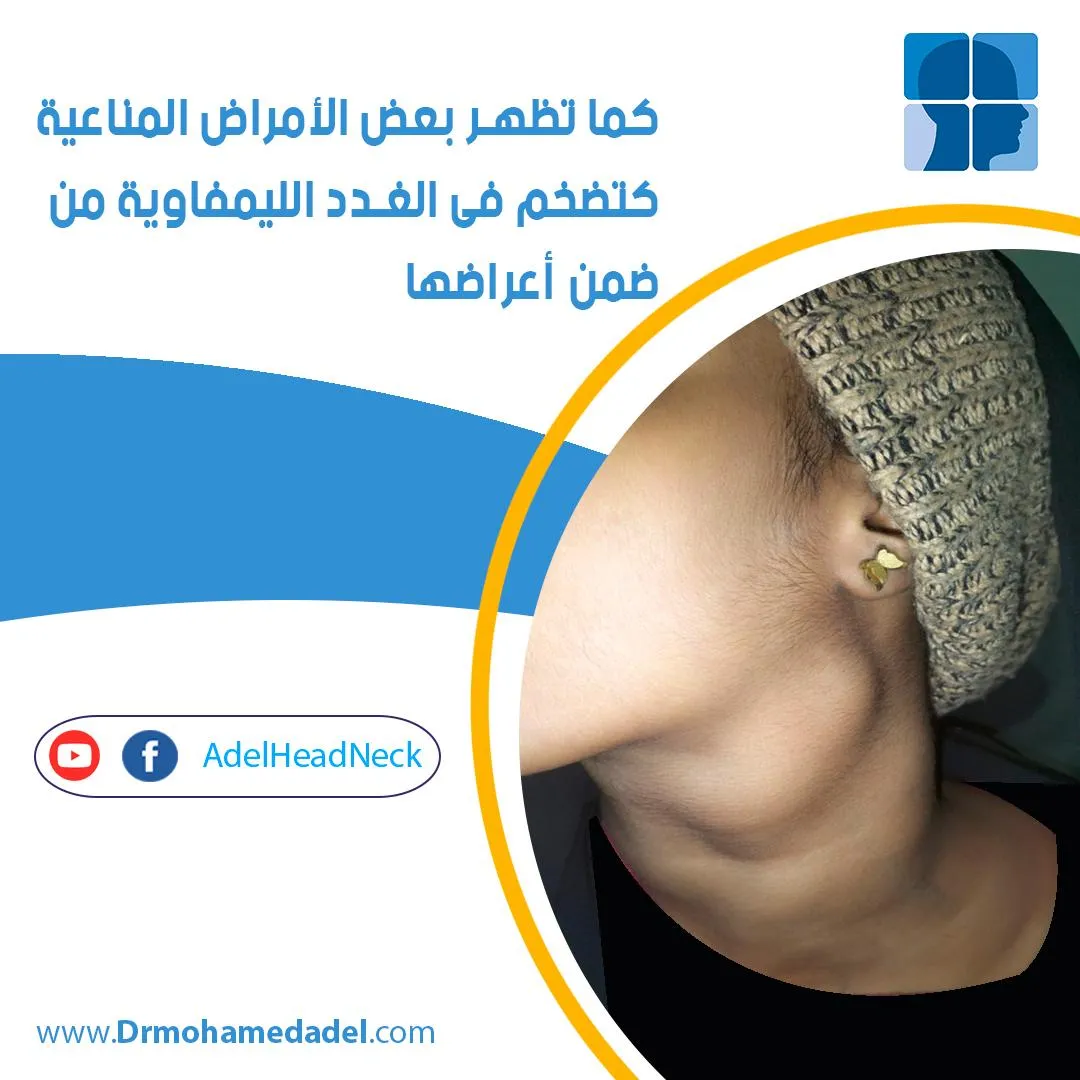
The body contains over 600 lymph nodes distributed across various regions; the neck alone houses approximately 200 of them, arranged in anterior, lateral, and posterior groups. Lymph nodes are also found within the parotid gland and near the salivary glands and thyroid gland. Furthermore, there is significant lymphoid tissue within the lining of the mouth, throat, and nasopharynx.
Is lymph node enlargement in adults dangerous?
In this video, Dr. Mohamed Adel explains the causes of cancerous lymph node enlargement in the neck.
In adults, the most common cause of enlarged lymph nodes is inflammation in nearby areas, such as the mouth, throat, or sinuses.Lymph nodes may also enlarge due to benign conditions—such as granulomatous diseases like sarcoidosis—or less common infections like tuberculosis, which can manifest as enlarged lymph nodes in the neck.In cases where enlargement is caused by cancer, the condition stems either from primary tumors originating in the lymph nodes (such as lymphoma) or from secondary tumors (metastasis) arising elsewhere—such as in the mouth or tongue—whereby cancer cells spread to the neck lymph nodes on the same side.
How is enlarged neck lymph node swelling treated?
When treating lymph node enlargement caused by inflammation, the swelling is viewed as a symptom rather than a disease in itself; treatment focuses on the underlying inflammation in the surrounding areas, and the swelling resolves once the root cause is treated.Granulomatous diseases, such as sarcoidosis and tuberculosis, are treated with specific medications. Treating enlargement caused by cancer begins with diagnosing the condition, followed by prescribing the appropriate therapy. For instance, lymphoma is diagnosed via a lymph node biopsy—using the specific sampling method the physician deems suitable for the enlarged nodes—after which the patient undergoes chemotherapy and radiation, along with periodic follow-up.Neck Lymph Node Removal Surgery
Lymph node removal surgery is a common procedure in many cases of head and neck cancer. As is the case with many tumors elsewhere in the body—where the primary tumor is removed along with surrounding lymph nodes and adequate safety margins—the approach to lymph node removal has evolved. It has shifted from a complete, radical resection of all lymph nodes on the affected side of the neck (along with nearby muscles, blood vessels, or nerves) to a more limited intervention that removes only specific surrounding lymph nodes while preserving the neck’s other structures.In this video, Dr. Mohamed Adel explains the techniques and steps involved in neck lymph node removal surgery.Enlarged Head and Neck Lymph Nodes in Children
There is hardly a child who has not experienced enlarged lymph nodes at some point during childhood. Most of these cases result from infections of the throat, tonsils, or nose. Consequently, such enlargement poses no serious risk; treating the underlying infection resolves the swelling, which typically disappears within a few days.The primary challenge arises when there is a suspicion that the enlargement might be serious, necessitating proper diagnosis or monitoring. This creates a scenario where medical errors frequently occur: on one hand, unnecessary procedures—such as biopsies or surgical removal—are performed on cases that require no further medical intervention; on the other, cases with a suspected risk of malignancy are overlooked, leading to a failure to complete the necessary tests and diagnostic procedures.In summary, while enlarged lymph nodes in a child’s neck are often not a cause for alarm, they do require medical examination and treatment. Failure to treat minor infections early on can allow the inflammation to worsen, potentially leading to an abscess that requires surgical intervention.
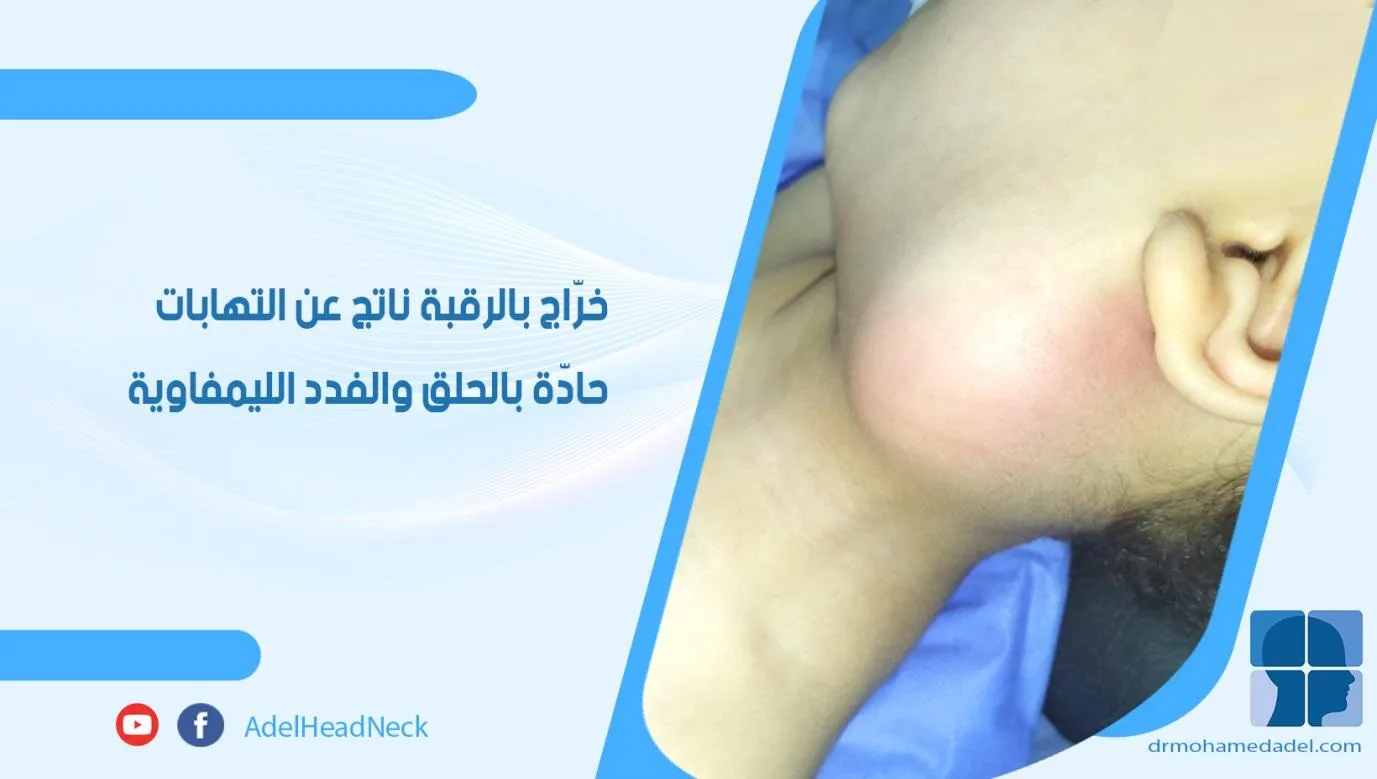

Causes of Lymph Node Enlargement in Children (Excluding Infections and Malignancies)
There are numerous other causes for the enlargement of lymph nodes in the neck in children, such as:- Benign lymph node tumors.
- Tuberculosis, which may present as lymph node enlargement, particularly in the neck.
- Autoimmune diseases.
- Certain genetic syndromes.