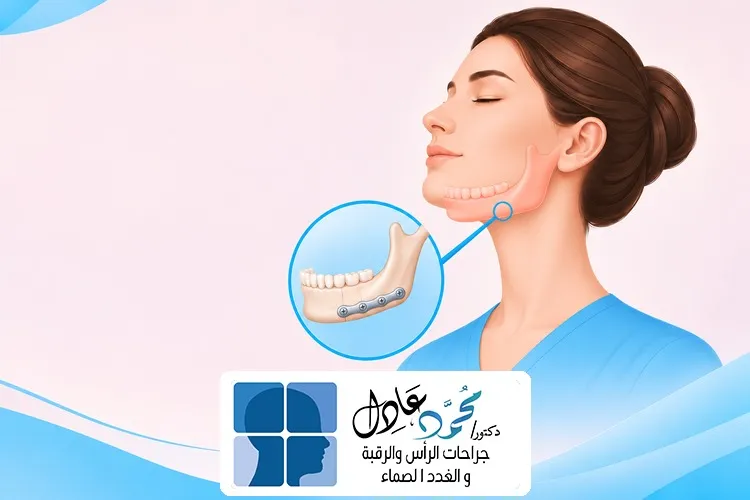
Jaw Tumor Surgery
The selection of the most appropriate surgical approach for a jaw tumor depends on several factors, including:- The nature of the tumor: Whether it is benign or malignant, and its relationship with the surrounding tissues, such as the floor of the mouth, tongue, and inner lining of the cheek.
- The extent of tumor involvement within the jawbone: Its relationship with the teeth and molars helps determine whether a segmental jaw resection or a marginal resection around the tumor is required.
- The patient’s age: Consideration must be given to the expected growth of the jawbone in younger patients, the importance of the jaw in chewing function in adults, and the presence of dental prostheses in elderly patients.
- The possibility of subsequent rehabilitation: This includes jaw reconstruction and dental implant placement to replace missing teeth.


Types of Jaw Tumor Surgery
The surgeon selects the most appropriate surgical approach for each tumor on an individual basis. Depending on the nature and extent of the tumor, surgical procedures may include total jaw resection, segmental resection of the jaw, or marginal resection while preserving the continuity of the jawbone. In some cases, removal of the temporomandibular joint (TMJ) may also be necessary.
Various types of jaw reconstruction plates may be used to stabilize the reconstructed jaw, rebuild a missing portion of the jawbone, or restore the temporomandibular joint.

Ameloblastoma and Benign Jaw Tumors
Ameloblastoma is a benign tumor originating from the enamel-forming cells of the teeth. It primarily affects the lower jaw (mandible), although it may also occur in other areas of the skull and skull base.


Ameloblastoma is classified as a benign tumor; however, it is characterized by its locally aggressive growth and ability to expand significantly. It may also have a tendency to recur in some cases following surgical removal.
To learn more about jaw tumors and ameloblastoma, and to understand the surgical treatment options available for jaw tumors, explore the information below.
Jaw Reconstruction / Jaw Restoration
How important are reconstructive procedures in the treatment of jaw cancer?


Reconstructive procedures play a vital role in helping patients overcome many of the aesthetic and functional complications resulting from jaw cancer resection. If these procedures cannot be performed due to the patient’s medical condition or the unavailability of the necessary medical facilities and specialized surgical teams, the patient may continue to experience several adverse effects and long-term complications following tumor removal.
What Is Microsurgery, and How Does It Benefit Cancer Patients?
The use of the surgical microscope represents a major advancement in the history of surgery, introducing numerous applications that would not have been possible with the same level of precision and success otherwise.
Although some may associate the use of microscopes exclusively with eye, ear, nose, and throat surgeries, their applications have expanded significantly over the past two decades to cover almost every surgical specialty.
Microsurgery is now widely used in various cancer-related procedures, allowing surgeons to remove tumors with greater precision while preserving the surrounding healthy tissues.
One of the key applications we perform is tissue transplantation (flap or graft reconstruction) to replace tissue lost following surgical removal. After complete tumor resection, the surgeon reconstructs the affected area using transplanted tissues, which may include muscle, bone, and sometimes skin. These tissues are then reconnected to their blood supply by microsurgically joining the arteries and veins under a microscope.
These advanced techniques have significantly reduced the impact of surgery on patients, helping restore the natural appearance and volume of the affected area while recovering a substantial degree of its original function.
A clear example is bone transplantation to reconstruct the jaw following resection. This procedure can help patients regain jaw function and prepare them for subsequent dental restorations and implants, enabling them to chew again. It also helps restore the natural facial appearance, making the visible effects of surgery much less noticeable.
What Medical Services Does Dr. Mohamed Adel Offer at His Clinic?
Diagnostic Services
Diagnosis of jaw tumors.
Diagnostic jaw procedures and biopsies.
Assessment and staging of jaw cancer.
Three-dimensional (3D) design of custom jaw reconstruction plates used following surgical resection.
Surgical and Therapeutic Services
Surgical removal of tumors of the upper and lower jaws.
Surgery for advanced jaw tumors.
Microsurgery and jaw reconstruction following surgical resection.
Surgical and medical management of jaw infections.
Surgical removal of gum tumors and reconstructive procedures.
Surgical and medical management of jawbone necrosis resulting from infections.
Surgical and medical management of jawbone necrosis following radiation therapy.