
“I noticed a small lump near my ear a while ago; could it be a tumor?” This question might trouble anyone who notices swelling or a change in the area around the ear or jaw, especially if it persists or gradually grows larger. However, the appearance of a lump in this region does not necessarily indicate a tumor; the cause could be inflammation, a blocked salivary gland duct, or enlargement of a nearby lymph node.
In some cases, the lump may result from a parotid gland tumor—whether benign or malignant. Therefore, the nature of the lump cannot be determined solely by its location or appearance; a thorough medical examination is required. In this article, we will explore in detail the symptoms and causes of parotid gland tumors, how they are diagnosed, and the primary treatment and surgical options, as well as when surgery becomes necessary.

What is a parotid gland tumor?
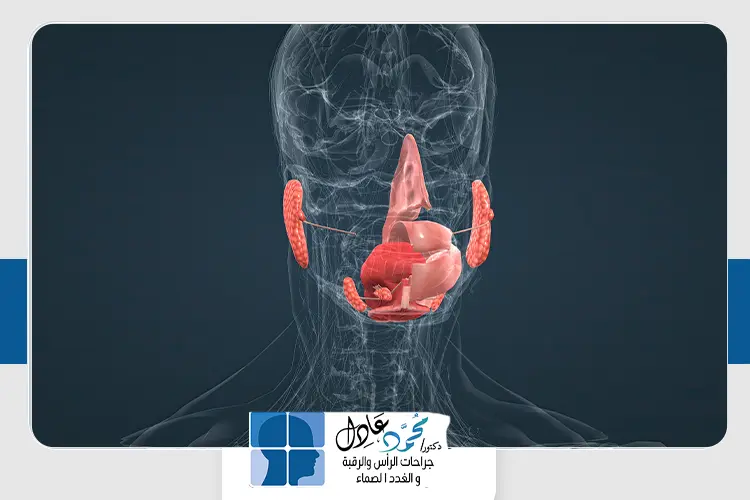
A parotid gland tumor refers to an abnormal growth or lump resulting from the irregular proliferation of cells within the gland’s tissues. The parotid gland is the largest salivary gland in the body; it is located on both sides of the face—specifically in front of the angle of the jaw and directly below the ear—and its primary function is to secrete saliva to aid in oral lubrication, chewing, and swallowing.
But does every parotid gland mass necessarily indicate a tumor?
The definitive answer is no; there is a fundamental difference between a tumor and inflammation or transient enlargement of the parotid gland. Enlargement or inflammation often results from a viral or bacterial infection or a salivary duct obstruction caused by stones; these conditions typically resolve with appropriate medical treatment and medication. A tumor, on the other hand, is a persistent tissue mass that requires medical evaluation and specific tests to determine its nature.
It is reassuring to know that the vast majority of salivary gland tumors—specifically those of the parotid gland—are benign (non-cancerous), accounting for approximately 80% of cases according to the Cleveland Clinic, whereas malignant tumors are far less common. However, doctors always emphasize the importance of early diagnosis for any lump appearing in this area to ensure appropriate medical management before the condition progresses.
What causes a lump or swelling in the parotid gland?
Swelling of the parotid gland—or the surrounding area—can result from various causes; the presence of a lump does not necessarily indicate a tumor. Swelling occurs when saliva flow is obstructed, the gland becomes inflamed, or abnormal cell growth takes place.
Key causes of parotid gland swelling include:
- Parotid gland tumors: These can be benign or malignant and often present as a persistent lump that may grow gradually.
- Parotid gland inflammation: This may result from a viral or bacterial infection and can be accompanied by pain, swelling, and fever.
aria-level=”1″>Inflammatory or immune-related causes: Such as certain autoimmune diseases that may affect the salivary glands and cause swelling.
Therefore, the presence of a lump behind the ear or swelling near the jaw is not sufficient on its own to determine the cause; it could be related to the parotid gland or the surrounding tissues and lymph nodes. Dr. Mohamed Adel, a Consultant in Head and Neck Surgery, identifies the cause through careful examination and assessment. He may require imaging tests—such as ultrasound, CT scans, or MRI—and sometimes a biopsy if a tumor is suspected, in order to reach an accurate diagnosis and determine the appropriate treatment plan.
What are the symptoms of a benign parotid gland tumor?
Symptoms of a benign parotid gland tumor often manifest as a lump or gradual swelling in the area in front of the ear or near the angle of the jaw; growth is typically slow and painless. The patient may notice a sense of fullness on one side of the face or a slight asymmetry between the two sides of the face as the lump increases in size over time.