
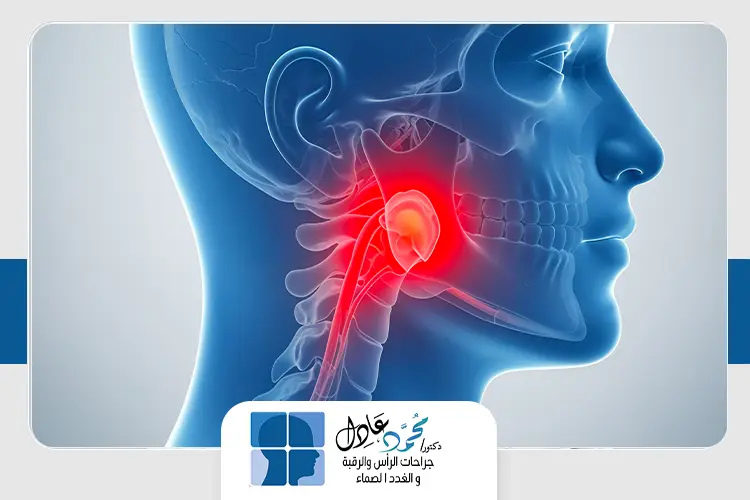
If you are wondering whether the parotid gland is contagious when swelling or pain appears near the ear, the answer depends on the underlying cause. The parotid gland itself is not a contagious disease; rather, certain inflammations affecting it can be contagious. Viral mumps is the most prominent example of this; it is a viral infection transmitted from person to person through respiratory droplets, saliva, and close contact.
Is the condition contagious when caused by other factors? Not necessarily. Swelling of the gland can result from stones or blockages in the salivary duct, bacterial infections, or other non-contagious causes. Therefore, the mere presence of swelling in the gland is not sufficient to conclude that a person has mumps or is capable of transmitting the infection.
In this article, we explain whether mumps is dangerous for children, how it is transmitted, and when an infected person can spread the virus. We conclude by discussing ways to reduce the risk of transmitting the infection to others.

Is Mumps Contagious?
Before answering whether mumps is contagious, it is important to clarify what is meant by the term. The parotid gland itself is a salivary gland and is not inherently infectious; however, it can be affected by a viral infection known as **mumps**. This is a highly contagious infection that can cause the parotid gland to swell.
Therefore, if the question “Is the parotid gland contagious?” refers to viral mumps, the answer is yes. The virus spreads from person to person through respiratory droplets and saliva—particularly when coughing, sneezing, or talking. It can also be transmitted by sharing cups, water bottles, or utensils that have come into contact with an infected person’s saliva, or through close contact.
According to the **Centers for Disease Control and Prevention (CDC)**, a person with mumps can transmit the infection before the salivary glands begin to swell and can continue to spread it for up to five days after the swelling starts. Thus, the answer to whether the parotid gland is contagious depends first on identifying the cause of the swelling. Not every instance of inflammation or swelling in the parotid gland is caused by viral mumps or is contagious.
Is every case of parotid gland inflammation contagious?
No, not every case of parotid gland inflammation is contagious. Parotitis—inflammation of the parotid gland—can result from various causes, including viral or bacterial infections, duct obstruction, stones, autoimmune diseases, and others.
Key causes include:
- Viral Mumps: One of the most common causes of parotitis; it is a contagious disease transmitted from person to person via respiratory droplets and saliva.
- Bacterial Infection: Can cause inflammation, swelling, and pain in the gland; the risk increases with dehydration, reduced salivary flow, or poor oral hygiene.
- Gland Stones or Duct Obstruction: These prevent saliva from draining, causing it to accumulate within the gland and leading to swelling and pain—particularly while eating. This condition itself is not contagious.
- Dehydration and reduced saliva production: These can increase the likelihood of duct obstruction and inflammation.
- Autoimmune diseases: Which can cause chronic inflammation and enlargement of the salivary glands.
- Other causes: Such as certain medications or radiation therapy to the head and neck area.
Therefore, swelling in the parotid gland does not necessarily mean a person has a contagious disease; determining whether the condition is contagious depends on the underlying cause of the inflammation. If you are wondering whether the parotid gland issue is contagious due to swelling or a lump in the area, it is best not to assume the cause is mumps alone. Book an appointment with Dr. Mohamed Adel to evaluate the swelling and rule out tumors or other glandular problems.
Is the parotid gland condition contagious in adults?
Is the parotid gland condition contagious in adults? Yes; if the reference is to viral mumps—which causes parotid gland swelling—it can affect adults and be transmitted from them to others. Mumps is not a disease that affects only children; it can strike children (aged 2 to 9), adolescents, and adults—particularly those who are not immunized against the virus.
The infection may begin with general symptoms such as headache, fatigue, and fever, followed by swelling in one or both parotid glands.